Op-eds
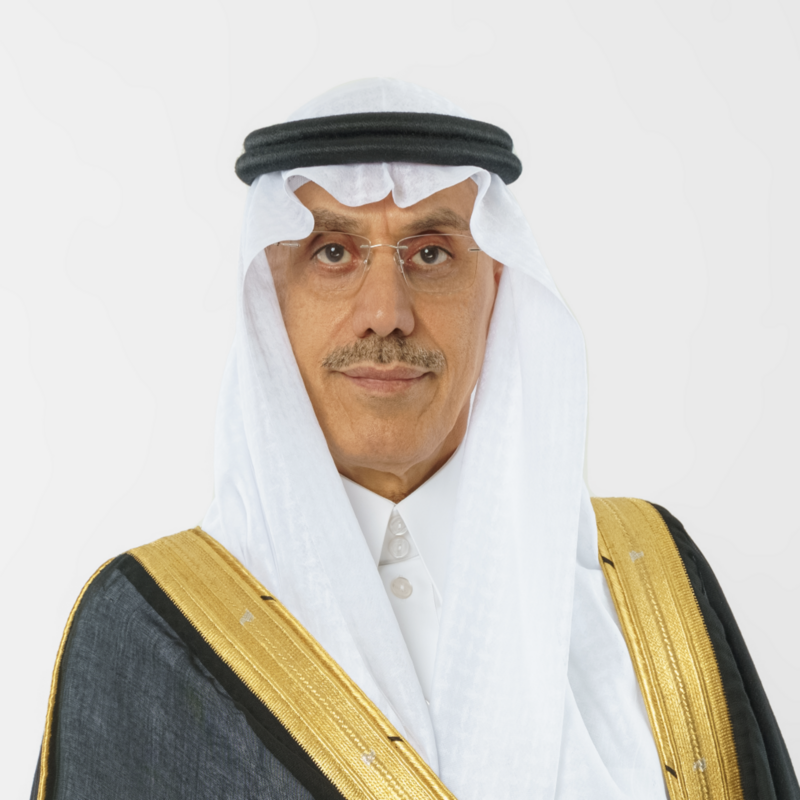
H.E. The President
The IsDB Board of Governors elected Dr. Al Jasser in early July 2021 to lead the AAA-rated institution. He assumed office as President of the IsDB and Chairman of the IsDB Group on August 9, 2021.
What Islamic Finance Brings to Climate Resilience
JEDDAH – As ministers representing the 57 member countries of the Islamic Development Bank Group gather in Algiers for the IsDB’s 51st annual meeting, the devastating effects of climate change are impossible to ignore. Wildfires consuming entire communities, floods displacing millions of people, and heat waves claiming
hundreds of thousands of lives. Such extreme weather events are no longer anomalies; they are the new normal, threatening lives and livelihoods in the world’s most climate-vulnerable regions – especially in the Global South. With traditional responses proving inadequate to this escalating threat, innovative finance must take center stage. According to the Intergovernmental Panel on Climate Change, as many as 3.6 billion people currently live in regions that are highly vulnerable to climate change. Between 2010 and2020, deaths caused by floods, droughts, and storms in those areas were 15 times more frequent than in low-vulnerability regions, underscoring the severe and unequal toll of the climate crisis.
Conventional wisdom holds that for resource-dependent economies, climate action is a matter of economic survival, while for developing economies, it offers a pathway to sustainable growth and development. But many economies fall into both categories – developing and resource-dependent –compounding the challenge of designing and implementing effective climate strategies. While a comprehensive strategy for building climate resilience is essential to strengthening developing economies’ ability to withstand shocks, resilience and adaptation must go hand in hand. For vulnerable countries, this may involve reinforcing infrastructure to protect against flooding, investing in drought-resistant crops, and diversifying income sources to reduce dependence on climate-sensitive sectors.
But conventional modes of resilience financing remain constrained, both in terms of sources and delivery mechanisms. As a result, vital social safeguards and support systems are often under funded or insufficient. The problem is made worse by growing uncertainty over the availability of concessional financing from developed countries.
Given this reality, financial innovation must become a central pillar of climate resilience. To that end, financial institutions, governments, and other stakeholders must work together to develop new financing mechanisms aimed at protecting climate-vulnerable regions. Encouragingly, several innovative financing funds and mechanisms have emerged to support resilience and adaptation efforts. These include the Green Climate Fund, which provides financial assistance to developing countries; the Climate Bonds Initiative, which promotes the growth of the climate bond market; climate insurance, which helps manage and reduce climate-related risks; community-based adaptation, which enables local communities to design and implement their own adaptation strategies; and nature-based solutions, which focus on restoring and protecting natural ecosystems. Even so, such financing falls far short of demand.
Multilateral development banks play a pivotal role in delivering the financing necessary for vulnerable countries to reduce emissions and invest in adaptation projects. According to the most recent Joint Report on Multilateral Development Banks’ Climate Finance, MDBs provided a record$125 billion in public climate finance in 2023. Notably, 60% of that total – $74.7 billion – was directed to low- and middle-income countries, highlighting MDBs’ commitment to supporting those most exposed to climate risks.
The IsDB is a notable example. In November 2024, the IsDB approved $1.15 billion in financing to bolster food and water security in Kazakhstan by sustainably irrigating 350,000 hectares of land. The project aims to boost average crop yields by 30%, thereby strengthening community resilience to climate-related disasters and improving the economic well-being of 1.3 million vulnerable people. Like other MDBs, the IsDB is grappling with the challenge of strengthening climate resilience across its 57 member countries, more than half of which are more vulnerable to climate change than the global average. Addressing such vulnerabilities requires an
estimated $75-90 billion annually through 2030 for sustainable agriculture, water, and infrastructure projects. Adaptation-related financial flows to these countries average $23.9 billion per year, leaving a 68% funding gap that the IsDB is actively working to close.
The growing supply of adaptation financing illustrates MDBs’ indispensable contribution to global climate efforts. But success should not be measured only by the amount of money disbursed; instead, it must be judged by tangible, real-world outcomes. While climate finance is growing, its effectiveness hinges on rigorous monitoring and impact assessment. Establishing robust reporting frameworks is therefore critical to building stakeholders’ confidence and channeling more financing toward adaptation projects. To enhance their impact, MDBs should also adopt targeted results-based and policy-based financing models.
Beyond bolstering borrowers’ institutional capacity and expanding targeted financing, MDBs also have an opportunity to boost resource mobilization by attracting capital from non-conventional sources. The IsDB’s sustainability framework is a prime example. Under this scheme, the IsDB has mobilized more than $6 billion by issuing Islamic bonds (Sukuk), attracting both Muslim and non-Muslim investors.
Rooted in asset-backing and risk-sharing, Islamic finance is inherently aligned with sustainability principles. In recent years, instruments like cooperative insurance (takaful), charitable endowments (waqf), and faith-based crowdfunding platforms have emerged as alternative sources of climate financing across the Muslim world.
Recognizing the need for targeted climate-funding solutions, the IsDB has actively promoted and supported these mechanisms.
By tapping into the $4.5 trillion Islamic finance industry and adopting its asset-backed, risk-sharing model, other MDBs could expand and diversify their funding sources, enabling them to support adaptation and mitigation initiatives in the world’s most vulnerable regions.
But the time for pilot projects and piecemeal interventions is over. To build a sustainable, climate-resilient future, MDBs must urgently scale high-impact solutions, embrace financial innovation, and foster global cooperation. Drawing on its over 50 years history, the IsDB is ready to do its part.
Muhammad Al Jasser is Chairman of the Islamic Development Bank Group.
This op-ed is inspired by the 2025 Annual Meeting of the Board of Governors, held in Algiers under the theme "Diversifying Economies, Enriching Lives," and the IsDB Group's overarching mission to foster sustainable economic growth and enhance the well-being of its member countries.
Leveraging Islamic Finance for Sustainable and Resilient Infrastructure
JEDDAH - Today’s world is confronting a host of complex development challenges, from climate change and rapid urbanization to widening inequality, debt sustainability, and a persistent digital divide. But, as the COVID-19 pandemic made plain, many developing countries lack the sustainable and resilient social-sector infrastructure required to address such complex and overlapping crises. More worryingly, these countries – particularly the least-developed among them – are unable to close their infrastructure gaps, owing to shrinking fiscal space, heavy debt burdens, and inadequate levels of official development aid.
By 2040, the global infrastructure-financing gap will have widened to an estimated $15 trillion – a massive shortfall that can be attributed to a few key factors. Many developing countries simply do not have the financial resources for expensive and time-consuming large-scale infrastructure projects. And private actors often shy away, owing to the perceived high risks of investing in infrastructure projects in developing countries. Together, these factors pose a significant obstacle to building desperately needed infrastructure.
The good news is that multilateral development banks (MDBs) and other stakeholders are increasingly aware of the need for swift action to overcome these challenges. MDBs are under pressure from their shareholders to become better, bigger, and more effective. An independent review of MDBs’ capital-adequacy frameworks – an important initiative commissioned by the G20 – recommended the expanded use of innovative finance. More recently, the G20 Independent Expert Group on strengthening MDBs released a multi-volume report that, among other things, calls for increasing private-sector engagement in development finance by broadening existing risk-sharing instruments and pioneering new ones such as asset-based vehicles.
Asset-based and risk-sharing finance could be transformative, because, unlike the conventional way of raising funds through debt, these models have the added benefit of forging partnerships and fostering a collaborative environment. Financiers become stakeholders, meaning that both parties have skin in the game and a vested interest in the project’s long-term viability and sustainability. This mitigates the risk of moral hazard often associated with debt-based models.
These principles form the foundation of Islamic finance, although its participatory nature extends beyond sharing risk, as it focuses on long-term partnerships and encourages a commitment to the social and environmental sustainability of a project throughout its lifecycle. The Islamic Development Bank (IsDB), of which I am president, embodies this approach. Over the past 50 years, we have approved more than $182 billion in funding for development projects related to renewable energy, the social sector, and – given our recent focus on driving green economic growth and developing human capital – sustainable and resilient infrastructure.
Islamic financial markets, valued at $3.25 trillion and with ample liquidity and appetite for asset-based and risk-sharing bankable projects, could thus be a powerful tool for mobilizing infrastructure investments in developing countries. In particular, a hybrid financing model that makes use of both conventional and Islamic finance could scale up investment in infrastructure projects. The IsDB has a proven track record of success in co-funding infrastructure projects with other MDBs and the private sector. Completed projects include Dakar’s Blaise Diagne International Airport (with the African Development Bank) and Jordan’s Queen Alia International Airport (with the International Finance Corporation).
Infrastructure financing mobilized through asset-based and risk-sharing financial instruments requires a well-developed and robust financial sector with strong legal and regulatory frameworks capable of protecting investors; robust domestic capital markets; and transparent monitoring and impact reporting. That is where MDBs come in. They can help develop and strengthen the financial infrastructure needed to attract private capital to developing countries.
Moreover, MDBs could boost investor confidence and help create a pipeline of bankable projects by taking collective action. The Global Collaborative Co-Financing Platform, recently launched by ten MDBs (including IsDB) and headed by the World Bank, is a step in the right direction.
Investing in sustainable and resilient infrastructure can mitigate the effects of climate change, yield long-term economic benefits, and improve people’s quality of life. But raising the necessary capital will require harnessing the potential of asset-based and risk-sharing finance. The IsDB is committed to playing a leading role in such efforts, but other MDBs and private investors must also embrace this approach. Only by working together to close the global infrastructure-finance gap can we build a more equitable future for all.
Global Capital Op-ed on ''Sukuk market’s next chapter: Financing the future, sustainably'' By IsDB President
The Op-Ed follows the Global Sukuk Summit 2025, co-hosted by IsDB on 21 October 2025 in London with the Financial Times Group, and supported by ICMA and the London Stock Exchange, under the theme “Capitalizing on Sukuk Beyond Traditional Markets.” The Summit convened global investors and policymakers as the Sukuk market surpassed the US$1 trillion milestone.
The insightful article highlights how Sukuk have evolved into a mainstream global asset class, underpinned by transparency, asset-backed structures, and strong alignment with sustainable finance.
Read the full Op-ed here